

Palestine Has a Flavor Most People Mistake for Lemon
Most people expect a sour note to come from a lemon.
In Palestine, it can begin as a cluster of deep-red berries growing on a sumac shrub. Before it is a spice, sumac is a harvest.
At the end of summer, when the berries have ripened to their deepest red, women in Asira al-Shamaliya gather the clusters. They clean them, spread them out to dry, separate the berries from their stems, and grind them into the coarse crimson spice now traveling inside the Fall Palbox.
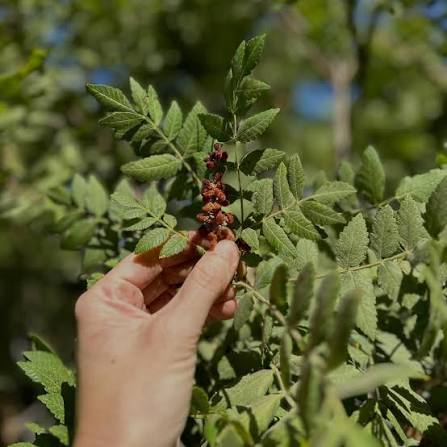
By the time sumac reaches a jar, its beginning is almost invisible. You do not see the hands that judged the berries by their color, waited for the sun to dry them, or knew from touch when they were ready to be ground. You only see a deep-red powder.
Then you taste it.
Sumac is bright and tart, with a fruity sharpness and a gentle earthiness. It is not hot. It wakes food up in much the same way lemon does, but without adding liquid or covering the flavor of what is beneath it.
Sprinkle it over eggs, labneh, hummus, salads, roasted vegetables, or chicken. Toss it with sliced onions and parsley. Keep it close enough to reach for before you reach for a lemon.
But to understand what sumac means in a Palestinian kitchen, begin with two dishes.
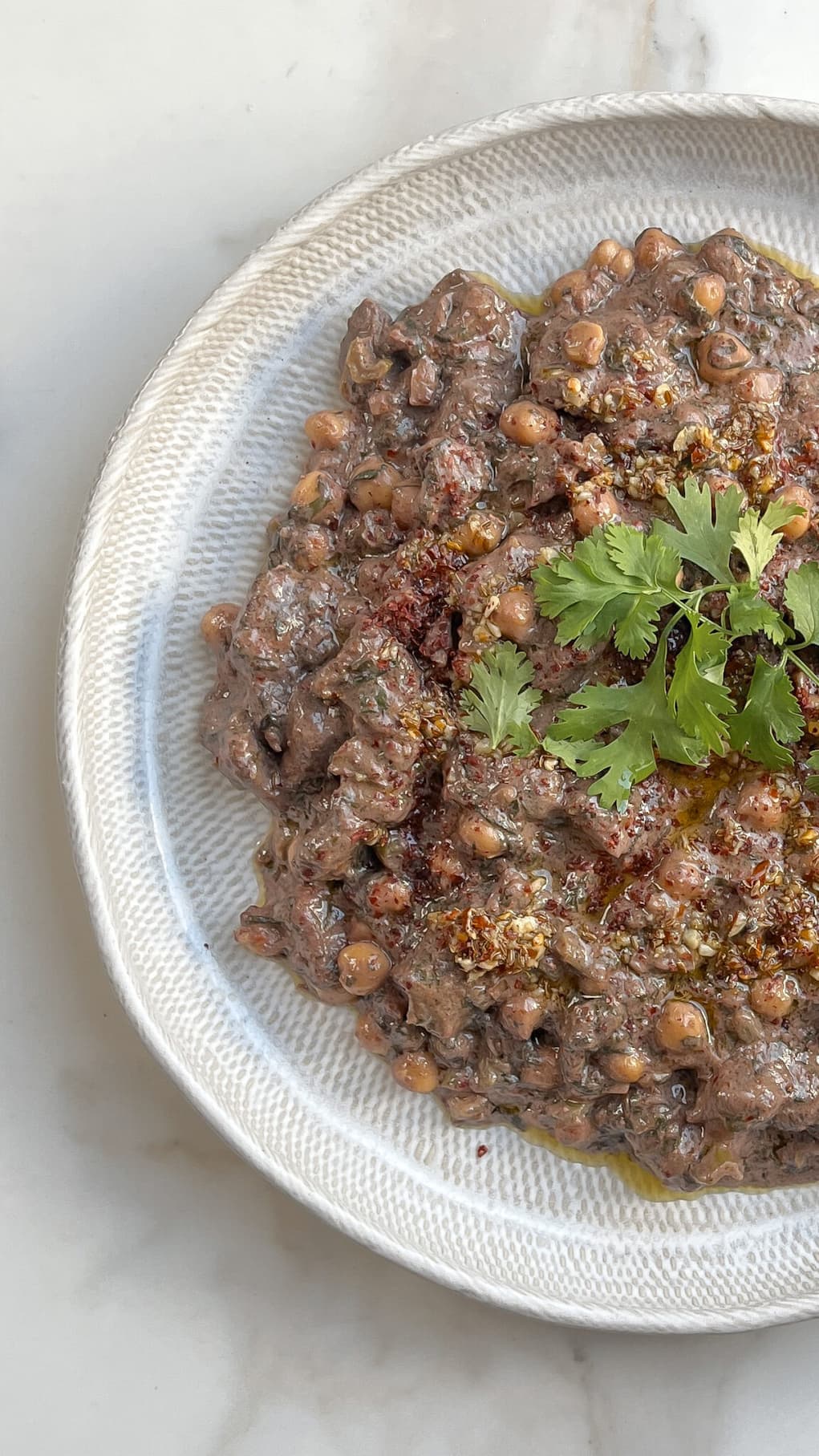
In Gaza, there is sumaciyya. Whole sumac berries are steeped and strained so their tart, ruby-colored liquid can become the heart of a rich stew with chard, chickpeas, tahini, and, traditionally, meat. It is a dish made in generous quantities and shared with family, friends, and neighbors. Here, sumac is not a finishing touch. It gives the entire dish its name and character.
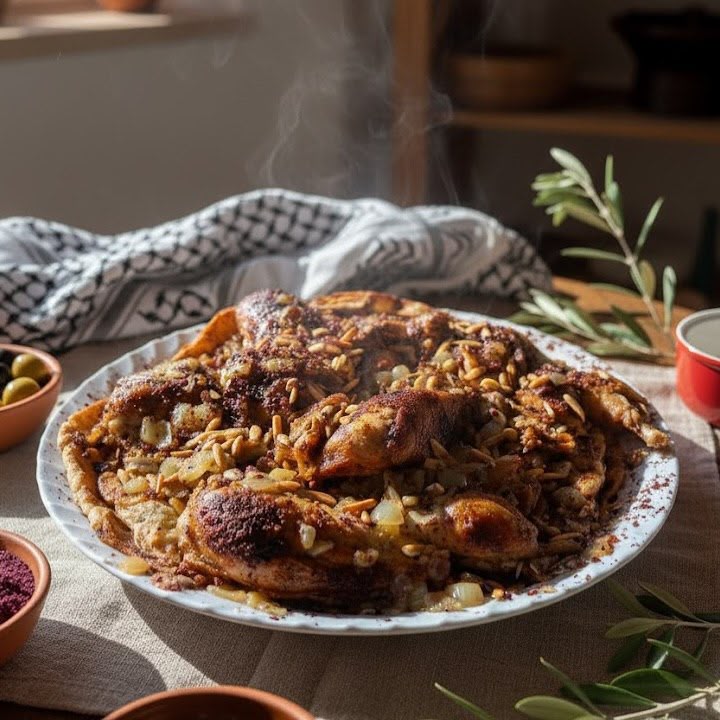
Across Palestine, there is musakhan. Musakhan belongs especially to the olive-harvest season, when freshly pressed olive oil is abundant. Onions are softened in that oil and covered generously with sumac, then spread over taboon bread and topped with roasted chicken.
It is a dish that refuses restraint. The bread should absorb the oil. The onions should carry the sumac. Your fingers should tell you that someone poured with a generous hand.
When both the olive oil and the sumac are Palestinian and high quality, musakhan tastes the way it is meant to: rich, sharp, earthy, and inseparable from the season that produced it.
One spice. Two Palestinian dishes. Two different maps of memory.
From Gaza's sumaciyya to olive-harvest musakhan, sumac shows us that preserving an ingredient also preserves the knowledge of when to pick it, how to prepare it, and what to cook when its season arrives.
That is what the women of Asira al-Shamaliya placed inside this jar.
Not only a flavor. A harvest made portable. A season kept from ending. A piece of Palestinian kitchen knowledge ready to live in yours.